Sunday, March 27, 2022

Book Review: Sheltering Mercy, by Ryan Whitaker Smith & Dan Wilt


It's rare for me to review a book before I've finished reading it,
but this is not a book to be rushed.

Sheltering Mercy: Prayers Inspired By The Psalms
is something special, something unique.


I met Dan Wilt many years ago when he taught worship leading workshops at Break Forth in Edmonton. I was impressed by his leadership skills, but also by his true heart for ministry.

Sheltering Mercy is a collection of "prayerful responses" to the psalms. 

They're prayers that read like poetry.
Poetry that feel like psalms.


It's a bit hard to describe the experience of this book. It starts with the physical presentation - a solid hardcover book with a classic, tactile cover. Open the pages to discover gracefully laid out text, interspersed with woodcut-style images. 

Each of the 75 prayers was inspired by one of the first 75 psalms. They're numbered, and also have Scripture references, but don't expect new translations of each psalm. These are like improvisations, starting from a key verse, and branching out into new words, new cries, new praises. The writing is lyrical, with gorgeous turns of phrase and poetic images.

I've taken to reading a prayer a day, before I begin my own writing practice. I know some readers who are using it as their Lenten devotional. Others are reading the psalm from the Bible, followed by the prayer from the book. One reader said that, inspired by the artwork, she's using her pencil crayons to doodle, colour, and journal as she reads. 

However you enjoy Sheltering Mercy, it will be a blessing to your devotional life!


This beautiful video gives you the prayer inspired by Psalm 1, 
read by Dan Wilt, with music by Michael W. Smith. 
Enjoy...


Book has been provided courtesy of Baker Publishing Group and Graf-Martin Communications, Inc.

Thursday, March 24, 2022

Guest Post: Getting UltraReal by Martha Tartanic

Welcome to a very special Goal Setting Fridays!!!

Today, I'm excited to introduce you to 
my dear friend


Be sure to read her fabulous bio at the end of this post,
and I also invite you to check out the
Book Review I wrote of her first book
- The Living Diet -
HERE.

Please welcome Martha,
and enjoy her inspiring post!


GETTING ULTRAREAL

By Martha Tatarnic


I am not naturally athletic.  I’m the kid who was picked last for every sports team in gym class growing up.  One of the happiest days of my high school career was when I graduated Grade 9 gym and never had to struggle through another class being graded on various forms of hand-eye coordination, running, jumping and throwing.


Nobody has been more surprised than I to find myself as a runner in my adult life.  Running has now been a consistent part of my life for the better part of two decades, and I have embraced long distance running in the last ten years.  In 2021, I trained for and ran my first marathon.  I enjoyed it so much that I’m training for another one now.  


Running is stress relief, it is prayer. 
It is the space I need in order to be able to reflect, rather than just react,
to the circumstances of my life.  
When I make room for running,
I seem to have room for all of the other family, church, work,
community commitments that I also have on my plate.


I know all of these things about running.  I know why I do it and why I love it.  And still, every time that I go out, putting foot to pavement, I can feel my mind rebel against the exercise.  Sometimes, when I am pushing myself to be faster or to run longer, my body starts to rebel too.  But mostly - and this sounds somewhat counter-intuitive - running is a mind game.  

Training for a marathon involves a regimented schedule for slowly building up my weekly mileage, as well as inching my long-run mileage closer and closer to the 42km mark needed to complete a marathon.  Each day that I head out to tackle my planned mileage, I have to fight the monkey on my shoulder nattering in my ear about the cramping I am sure I can feel in my side, the impossibility of the miles stretching out in front of me, the labour of breathing that already threatens to derail my plans, and the sure and certain feeling that I have to pee, even though I went just before leaving the house.  I worry that it’s too hot or too cold or too windy or too slippery; I don’t believe that I can complete the assignment in front of me.


Ultrarealism* is a powerful technique from the realm of endurance sports,
and it has been a game changer for me - as a runner, and also as a person. 

It is the practice of seeing, accepting, and embracing the actual circumstances in which you find yourself.
It is about responding to the moment in front of you rather than the moment you worry might be coming
or which circumstances you wished were different. 

When people talk about positive thinking, I instantly lose interest.
Ultrarealism, however, isn’t about training the mind
to squeeze reality through the frames of any sort of rose coloured glasses.
It’s about getting real. 


It is easy as a runner to expend large amounts of energy and anxiety worrying about what might happen or wishing that things could be different from what they are when you have twenty, thirty or forty kilometers stretch in front of you. If we instead train our minds to focus on what is actually happening and how we really feel, then a new sort of freedom opens up. 


I might get freaked out about how my breathing is uneven. I might feel despair about the spitting rain outside and how slowly the first kilometer seems to have gone when I still have twenty-nine to go. But while these things about breathing and rain and mileage might be true, I can choose to note that my leg muscles feel strong, the rain is refreshing, and I have the great privilege of being able to run. I am not just not dying; I am not just safe and okay. I am running and it feels good. 


“I’m doing it!” my friend Sarah uses as her power statement. It’s an ultrareal power statement. It’s not the power of positive thinking. It’s a statement of fact. For all of the worry or uncertainty or reluctance that we might feel about putting on our shoes and tackling some mileage, here we actually can find ourselves - out running. We are out here. And we are doing this.


The benefits of ultrarealism don’t just apply to running.  

Instant gratification is easy to come by, but a lot of what makes life worth living requires a measure of patience and openness to stick it out past beginnings that aren’t comfortable or fun.  Whether you want to learn a new skill, take on a creative project, meet your professional goals, improve as an athlete, or even just increase your capacity for prayer, the practice of getting ultrareal can provide perspective that can allow you to overcome the challenges of your own mind convincing you that you can’t do a certain thing.


Ultrarealism is like the famous serenity prayer: 

God grant me the courage to change the things that I can,
the serenity to accept the things I can’t,
and the wisdom to know the difference. 


There is much about the circumstances of a run - not to mention the circumstances of my life, and all of the other challenges that I take on - that I can’t change or control, and within all that isn’t shaped and dictated by me is the choice to keep one foot going in front of the other. 

Somewhere in the letting go and the choosing anyway is a wild and surprising joy.


MARTHA TATARNIC - Author. Priest. Runner.

Martha’s second book - Why Gather? The Hope and Promise of the Church - will be published this June. She has also authored The Living Diet:  A Christian Journey to Joyful Eating, an exploration of our relationship with food and our body through a Christian perspective. She is the lead priest of a thriving downtown Anglican church in St. Catharines Ontario, St. George’s. She writes a regular blog for the Anglican Church of Canada, which can be found at medium.com/@mtatarnic  Details on writing, speaking engagements and her author’s journey can be found at https://MarthaTatarnic.ca


* Matt Fitzgerald coins this term “ultrarealism” in his book, The Comeback Quotient, 2020, as a mental fitness technique which he applies particularly to endurance sports. I (Martha) adapt his definition slightly in applying it to my life.


Tuesday, March 22, 2022

Book Review: The Girl Who Could Breathe Under Water, by Erin Bartels


I love this book and you should buy it!!!

There you go - that's my whole review in a nutshell.

Erin Bartels is quickly becoming one of my
I've-read-everything-she's-written authors.

To prove my longterm love,
here's my 2019 review for We Hope For Better Things.

And here's my 2021 review for All That We Carried.

Seriously - thank goodness she's so prolific!

Also, I know we're not supposed to judge a book by its cover, but come on! That cover?? That title??? I was hooked before page 1...


The Girl Who Could Breathe Under Water gives us a most intriguing opening. Our narrator, Kendra, isn't speaking to us. She's speaking to "you." Who is this "you" and why is she sharing this story with him or her? Already, lured in ...

Kendra spend her summers growing up around Hidden Lake, an idyllic childhood world of water, forest, and freedom. She had those incredibly close friendships that form from late night campfires and woodland adventures. But something happened on the lake with one of those friends. As an adult, Kendra transformed her trauma into a best-selling novel. But there is one dissenting voice: an anonymous letter from "A Very Disappointed Reader" questions Kendra's version of the truth. Her second novel is due, and she has incurable writers block. Her solution? Return to the lake and confront her past.

I inhaled this book! Erin's writing style is so incredibly beautiful. Her deep love for the lake setting puts us straight into the sensual beauty of sunsets and morning mist.

She has a gift for creating compelling, fully realized characters, and the plot folds and flows in a way that keeps us fully engaged in both the present day story and the perfectly utilized flashbacks.

There were two themes that I thought Erin handled particularly beautifully:

First: Fiction vs Truth. Where is the truth in fiction? How do we discover ourselves, others, and the world through story? I don't want to say to much about this to avoid spoilers, but as a writer and an avid reader, this theme was truly powerful and served the story brilliantly.

Second: trigger warning: abuse and assault. There are difficult themes in this book, not often handled in Christian fiction. Erin has a powerful way of sharing the reality of the story, without ever exploiting or sensationalizing. 


I opened this post with my 2-line review, but honestly,
 I feel I could write a proper essay on how much I love
The Girl Who Could Breathe Under Water!
 I truly can't recommend this book enough! 

Erin's site is full of all kinds of wonderful treasures like blogposts, photography, and podcasts.
You can check it all out here:

ErinBartels.com


Book has been provided courtesy of Baker Publishing Group and Graf-Martin Communications, Inc.

Friday, March 18, 2022

Goal Setting Fridays - The Inefficiency of Worry


Welcome to Goal Setting Fridays!

Don’t forget to check out last week’s post:

Resource Round-Up


Being a Planner also, often, naturally leads to another Truth:

I’m a Worrier.


I wish I wasn’t. My husband isn’t, and there are times when I envy him. When stressful times come, he has a faith and peace that I just have trouble harnessing. And let’s be completely honest: not just in “stressful times”. As a Worrier, I also have the unique gift of creating stressful times for not-yet-happened times.

For years, I’ve tried to strategize worry out of my life, with varying and inconsistent results. I’ve read essays and articles from various thought-leaders on how to eradicate worry from my mind. I’ve read all the Bible verses that speak to letting go of worry and trusting in God.

In theory, I get it. I really do. But in reality, WOW, it’s just so hard to simply stop worrying!

After all, my worry shows that the problem is important. My worry gives the situation weight and prominence in my thinking. It helps me prepare for difficult situations.

Doesn’t it? That what it feels like in the moment.


But am I really a better Planner, am I truly more prepared, because I worried?

Or, is there a way I could do the planning without the worrying?

Could less worry actually make me a better Planner?


Last week, my morning devotional contained this verse from Luke 12:


Who of you by worrying can add a single hour to your life?


I’ve read these words a hundred times, but for whatever reason, last week, this verse hit me in a brand new way.


There have been so many reasons to worry lately:


The war in Ukraine.
The end of Covid support for self-employed artists.
The end of mask mandates and restrictions, while Covid rises again in China.
Trying to find our pathway back to live performances in a whole new world.
The general worries of family and health and life in general.
Did I mention Ukraine?

We’re also in a unique time of transition: after two whole years of pivoting and trying to find creative ways to maintain our ministry, we’re now swamped with work! We’re making a swift transition from struggling-to-create-work into working overtime, and it’s hard!

On the flip side, the lockdowns taught us the value of incorporating Gentle Time in our lives - time for reading, walking, exploring our neighbourhood, and just having quiet time together. Now that the world is returning to “normal”, I steadfastly refuse to jump back into the rat race and abandon our Gentle Time.

The key to avoiding complete burnout will be Efficiency. 

I'll need every hour I can get, and I'll need to use them well.


So when I read this:


Who of you by worrying can add a single hour to your life?


The lightbulb clicked on:


Worry is a threat to my Efficiency.


Worrying isn’t going to help me do the things I want to do.


Worry won’t give me more hours - it’ll eat up my time.

Worry won’t give me more ideas - it will cloud my mind.

Worry won’t give me more freedom - it’ll make me operate from a place of fear.


Worry is a threat to my Efficiency.


Simply “giving up” worry never made sense to me, but for whatever reason, it all clicked this week.

I’ve now found a hardcore, practical reason to eradicate worry from my life.

Now, I’m not saying I’ve stopped worrying altogether. If anything, my problems and concerns have only grown over the past week.


But when worry comes, I have a solid reason to ask it to leave.


“Not now worry - I just don’t have time for you. 
I have bigger, better things to do, and they need my hours more than you do.”


So far, it’s working. I’ll let you know how it goes from here…


Are you a Worrier?

How do you reduce worry in your life?  


Thursday, March 10, 2022

"Hear Me Roar" - A special post for International Women's Day

It's Birthday Week in our house! 

First Dad, then Gerald - we've had SO. MUCH. CAKE!!!

(not that I'm complaining...)

Because of all the celebrating, I'm taking a break from Goal Setting Fridays today to share a very special link:

In celebration of International Women's Day,
The Anglican Journal (Canada's largest Christian newspaper)
posted a special article by my Dad!

“Hear me roar”: In celebration of the ordination of women
By Rev. Hollis Hiscock

I highly encourage you to read this wonderful and inspiring article!

You can read it HERE.


Thursday, March 03, 2022

Goal Setting Fridays - Resource Round-Up!


Welcome to Goal Setting Fridays!

Why Fridays? 
So you can ruminate over the weekend & get a fresh start on Monday!

Please subscribe to receive all new posts!


Don’t forget to check out last week’s post:

5 Ways to Up Your Goals


Every once in a while here on Goal Setting Fridays,
I’m going to share some of my favourite Goal Setting Resources with you.


Today, I have a list of five people who bring me lots of inspiration!
They come from different backgrounds and industries, each approaching productivity from a very different perspective. Some are high creatives and others are amazing business people. All of them, in their own ways, bridge the gap between those two worlds with imagination and energy.


Here are 5 of my favourite people who write about Goal Setting and Productivity:


Michael Hyatt 

Michael is the go-to guy for learning about Goal Setting. I’ve read his book - Your Best Year Ever - at least 3 times, and I know I’ll read it again. He has lots of resources on his site, including a fantastic podcast.


Steven Pressfield 

The War of Art and Do The Work are in regular rotation on my Kindle. I usually read at least one of them each year. They focus on overcoming Resistance - that impersonal, immovable, limiting force that rears its ugly head any time we set out to do something amazing with our lives.


SARK 

Susan Ariel Rainbow Kennedy is an author, artist, entrepreneur, and mentor. Don’t let the fun name, playful drawings, and bright colours fool you. SARK is a sharp business woman who’s turned her signature take on the world into a unique empire. I have no doubt I’ll end up writing a blogpost about the transformative power of her “micro-movements.”


Julia Cameron 

The Artist’s Way has saved more than one creative soul over the years, mine included. Julia is a creativity teacher for all levels and expressions. I can’t recommend her teachings and methods enough!


Seth Godin 

Seth is known for writing short blog posts featuring big ideas. Or maybe, more specifically, bite-sized ideas with big impact. If you’re looking for some fresh perspective on productivity, his blog is a great place to start. Be sure to check out the “Free Content” section, as well. 


Who are some of your favourite Goal Setting experts?

Please share their names and links in the Comments below… 


Thursday, February 24, 2022

Goal Setting Fridays - 5 Ways to Up Your Goals


Welcome to Goal Setting Fridays!

Why Fridays?
So you can ruminate over the weekend & get a fresh start on Monday!

Please subscribe to receive all new posts!


Don’t forget to check out last week’s post:

S.M.A.R.T. Goals Saved My Reading Life


Last week, I shared a recent journey in my reading life, 
and how the S.M.A.R.T. acronym helped me achieve my goal.


To remind ourselves, a S.M.A.R.T. goal is:

Specific
Measurable
Accountable 
Realistic 
Time-sensitive


By using the S.M.A.R.T. pattern, I was able to increase my reading from almost no books a year to 24 books a year!

I completed this goal in 2018 and again in 2019, but then the pandemic hit, and everything changed!

Reading was one of the things that truly saved me in 2020. I couldn’t bear to read non-fiction, but I devoured books about historical heroines, quirky friends, and faraway adventures.


In 2020, I had set a goal of reading 24 books. 
By New Year’s Eve, I’d read 42!
(You can find my 2020 reading list HERE.)

2021 came, and I thought, “Well, that was fun, but it certainly isn't repeatable. This year will be sooooo different!”

(Ah, the naiveté of January, 2021…)

“24 is obviously too low; 42 is too high. I’ll split the difference and read 36 this year.”

By August, I’d smashed that goal completely! 
It had become abundantly clear: 
It was time to up my goal!


Upping your goals isn’t about creating something new. 

Instead, it’s about adding to a goal-already-in-progress.
It’s stretching a goal to give yourself an even greater challenge,
and potentially, an even greater success!


Realizing you’ve outgrown an older goal is a really exciting moment! 

Not only have you succeeded in your original goal, but you’ve grown to the point that you now need a new challenge.


How do you know when it’s time to up a goal?

It’s no longer a challenge.

It’s become too easy for you to achieve.

You’re achieving the goal much sooner than planned.

You realize you underestimated your abilities.

You’re getting bored!


I had definitely reached that point with my reading goal. It was glaringly obvious that 24 books had become too easy to achieve. Plus, I’d re-fallen in love with reading! I craved moving stories and inspired writing. 24 books just wasn’t enough to satisfy me anymore. 

Remember, upping your goals isn’t just about doing more for the sake of doing more.
It's about realizing growth, and rewarding it with an even greater challenge.

As our S.M.A.R.T. acronym tells us, we still want to be Realistic.
If you have to up your goal, that means you've discovered a whole new level of what’s Realistic!
You’ve raised the barre! You’ve stretched and grown your own Circle of Influence.
How awesome is that?

Here are 5 ways you can up your existing goals:


HIGHER TOTAL

Sometimes, it’s as easy as increasing the numbers:

Want to lose 5 pounds? Try losing 6.
Want to run 10 km? Try running 15.
Want to write 100 pages? Try writing 200.


FASTER TIME

Because your goal is Time-sensitive, you’ve set a timeline for your achievement. Maybe you need to shorten that timeline.

Are you trying to accomplish your goal in 6 months? Maybe you can do it in 5? Or even 4?

Again, keep it Realistic. The point is to challenge yourself, not give yourself burnout.


LONGER TIME

Maybe your goal isn’t about achieving something quickly, but about building a longterm habit. Rather than shortening your timeline, maybe you need to extend it.

If your goal is to walk 20 minutes a day for a month, what about making it two months?

Or maybe that’s not the time you want to increase. Maybe, instead, you increase your walk from 20 minutes to 25 minutes?

Either way, play with time to see if you can stretch and grow your habit goal.


GREATER COMPLEXITY

If a project is coming together easier and faster than anticipated, how can I add to it to make it more dynamic and complex?

For example, let’s say my goal is to organize a community concert for local bands. Things start coming together really quickly and easily. What can I add to this project that’s still Realistic, but also works towards my goal? 

Maybe I can set up tables for local vendors? Or have the art school create a pop-up gallery? Or add face-painting and a kids stage for our younger audience? 

Each of these ideas adds to the complexity of the original idea: “organize a community concert.”


INVOLVE MORE PEOPLE

Many goals are solitary pursuits, but sometimes our goals are based in community.
(Community in this sense could mean your family, your workplace, your church, or any situation that involves a group of people coming together for a common purpose.) 

If that’s a key component of your goal, how can you increase the involvement of other people?

For example, let’s say my goal is to create a community garden. I need six volunteers to get the garden started.

That first summer, I quickly reach my goal of six volunteers. Excellent! 

So, how can I up this goal?

Maybe, I can get more volunteers, so we can build a bigger garden?

Maybe, I decide to make it a multi-generational garden. How can I find some young people to partner with the seniors?

Maybe, I’d like to have more cultural diversity. Maybe I can start advertising for volunteers in local cultural centres?

Maybe, I want to make the garden accessible for volunteers in wheelchairs. Is there a local builder who can understand the special requirements of physically challenged gardeners? 


All of these are great ways to up your goals!


For my growing reading goal, the answer was clear: Higher Total.

I had made the 2021 goal of 36 books, because I was afraid of overcommitting myself. 

But when I reached 36 in August, I realized I was way past the point of no return. I looked at my pace, and realized I could, with a little focus and planning, read 50 books that year.

50 books! I never would have been brave enough to set that goal in 2018, 2019, or even 2020.

But I’d outgrown my initial attempts. It was time to up my goal.


I committed to finishing 50 books in 2021. 
By New Year’s Eve, I’d read 55 books!

For 2022, I’ve made a solid goal of reading 50 books this year! 


My goal fits the S.M.A.R.T. profile perfectly. It’ll take some planning to achieve, but I’m so excited about all the gorgeous books I’ll get to read this year!!

And who knows, maybe in another year or two, this goal might need to be upped again?


Take a close look at your goals this week:

Are there any that are becoming too easy?

Any that leave you bored?


What are some ways you can up your goals?


Thursday, February 17, 2022

Goal Setting Fridays - S.M.A.R.T. Goals Saved My Reading Life


Welcome to Goal Setting Fridays!

Why Fridays? 
So you can ruminate over the weekend & get a fresh start on Monday!

Please subscribe to receive all new posts!


Don’t forget to check out last week’s post:

Eat the “Snow” Elephant


In 2017, I made a horrifying personal discovery:

I’d stopped reading.

Not completely, of course, but by any literary standard, I’d shut the book.
(Insert groan for bad pun here…)


At the end of that year, I couldn’t remember how many books I’d read. Four? Maybe five? I doubted I could count them on one hand.

My degree is a Double Major in Theatre with a Minor in English. That’s a lot of heady, literary pages. And I didn’t stop there. For years, I devoured books by the shelfful. When Gerald and I got married, our biggest debate was where to put all the books in our new home.

But then we moved 7 times in 9 years. Boxes of books became harder and harder to lug around the country. Many times, we just didn’t unpack them, or we put them in storage for months on end. We took on new jobs and challenges. Our schedule was filled with new creativity and adventures. 

Somewhere along the way, I found other ways to fill my time. 

My reading life had been sidelined.


So, in 2018, I set an ambitious goal for myself:


Read 24 books in a year.


This wasn’t just about choosing a random number of books to read. I truly wanted to reset and reenergize my reading life.

This felt like a huge leap. I knew it would require a shift in my time and my mindset. I wanted reading to be important again. 

Because of everything that was at stake, I really wanted to succeed, so I created a S.M.A.R.T. Goal.


If you’re not familiar with this acronym, it stands for:


Specific

Measurable

Accountable 

Realistic 

Time-sensitive


Depending on where you search, there are some variations on the words, but the intentions are always the same.


Here’s why my simple goal - Read 24 books in a year - was a perfect S.M.A.R.T. Goal:


SPECIFIC
Read 24 books. Not articles, or blogposts, or stories. Read books. 24 of them, please.

MEASURABLE
Read 24 books. It’s a concrete number, easy to measure.

ACCOUNTABLE
I told Gerald and my parents what I was doing. I knew achieving my goal would require a bit of a lifestyle change as I learned to dedicate more time to reading. I wanted their support and understanding.

REALISTIC
24 books a year, or 2 books a month, sounded like something I could possibly make work. If I’d aimed for 100 books that first year, it would have been completely unreasonable. Chances are, I would have fallen far short of that number, and would have given up on the goal entirely. I knew that 24 books would require some focus and planning, and that it would push my limits, but ultimately, it felt doable.

TIME-SENSITIVE
24 books in a year, or 2 books a month. This gives me a clearly defined schedule of how to achieve my goal. If I could keep that average pace of 2 books a month, I would stand a great chance of success. 


My progress ebbed and flowed throughout the year. Some months, I could only manage one long book, so the next month, I would choose 3 shorter books to keep myself on schedule. I kept a list of all the titles I read so that I could celebrate my monthly success and not lose track of where I was in the 24. Gerald was very supportive any time I claimed a Sunday afternoon as “book time.”

December was busy, as it often is for musicians, so by the end of the month, I was coming up short. I had to read two books in the final week of 2018. I wrapped up a novel on the 30th, but there was no time to squeeze in the final book. 

Finally, Dad suggested I read “How The Grinch Stole Christmas.” A cheeky suggestion, but as he pointed out, it’s a well-studied seasonal classic, and yes, technically, it’s a book!


On the day before New Year’s Eve,
I celebrated the completion of my 24 Books of 2018!


As I stated earlier, the main point of this goal wasn’t simply to read 24 books.
It was a means to a greater end. 

The true goal was to reset and reenergize my reading life,
and I’m thrilled to say, it worked!


I set another goal of 24 books in 2019 and 2020, but as we all know,
everything changed in 2020... 

But that’s another story!
Stay tuned for Chapter 2, next week…

(And I promise, an end to the booky puns!)


Look at the goals you’ve created for 2022.
Are they S.M.A.R.T. Goals?


What can you do to make them
Specific, Measurable, Accountable, Realistic, and Time-sensitive?


Thursday, February 10, 2022

Goal Setting Fridays - Eat the "Snow" Elephant


Welcome to Goal Setting Fridays!

Why Friday?
So you can ruminate over the weekend & get a fresh start on Monday!

Please subscribe to receive all new posts!


Last week, we revealed

The Secret Code of Procrastination


Winter has hit hard here in Niagara.
We’ve had a lot of snow. And I mean - A LOT!!! 


It’s the kind of weather where people who’ve been living here for 50 years are saying things like, “We’ve never seen this much snow before!”

I’m including my new favourite photo for your amusement! That’s me on the first day of our first storm. Gerald took this from our front porch. I’m standing on the sidewalk.

On that one day, we had somewhere between 50-60 cm overnight! Forget waking up to a gentle blanket of snow - we were smothered under a full-on double duvet!

We had to shovel through drifts just to get off the front porch. We live in a downtown area with tall, Edwardian houses and small front lawns. It took a full 10 minutes just to get to the end of our front walk. I made my way to the driveway, where I could finally see the full impact of the blizzard. The entire SUV was missing under a mountain of white stuff. There were several feet piled up in every direction. And the space from the car to road was well above my knees.


I felt overwhelmed. My mighty shovel suddenly felt like a teaspoon in my mittened hands. 

More snow was in the forecast. If we didn’t clear this out today, it was only going to get worse.


I suddenly thought,
 “Just eat the elephant.”


“Eat the Elephant” has become one of my favourite mottos ever. It’s especially fun to mention at parties if you want to get barraged with “What’d she say?” looks.

Often attributed to Desmond Tutu, the original phrase says this:


“There is only one way to eat an elephant: a bite at a time.”


So often, we are faced with hugely overwhelming tasks. They can seem insurmountable. But, if we just keep nibbling away at it, eventually, the job will get done.


My snow drifts definitely felt elephant-sized! There was only one way to clear them.

I started to dig in, one shovelful at a time. I took deep breaths into my back, stopping often to stretch. Neighbours helped neighbours, clearing walkways and sharing laughs. I took photos of the covered cars and sugar-coated tree branches.

Several hours later, thanks to lots of little bites, our patch of property was relatively snow-free.
At least, for a while…


It’s the same when we have any kind of large, overwhelming goal.

The key to accomplishing our huge, Longterm Goals is to take them one bite at the time.

This is where our Habit Goals and Single Moment Goals come in.


  • Want to write a book? Write one page a day.
  • Want to sing an opera? Start learning the first line.
  • Want to read the Bible? Read a few verses each day.
  • Want to declutter your house? Empty one drawer.


Over time, these tiny “bites” add up!

It may feel small in the moment, but remember:
Any progress is progress!


What huge goal do you want to accomplish?
What’s one tiny “bite” you could take today?


Thursday, February 03, 2022

Goal Setting Fridays - The Secret Code of Procrastination


Welcome to Goal Setting Fridays!

Why Fridays?
So you can ruminate over the weekend & get a fresh start on Monday!

Please subscribe to receive all new posts!


Don’t forget to check out last week’s post:

What Exactly is a “Single Moment Goal”? 


If you love to make To Do Lists, you’ve probably noticed an annoying phenomenon:

As much as you get done,
there are still those items that you find impossible to cross off! 

No matter what you do, you just can’t bring yourself to do them.
Sometimes, these pesky items can hang out on your To Do List for weeks, months, or even years!

I’m not a procrastinator by nature. I love checking things off my To Do List!
But this nasty phenomenon can strike even the best of us.


Years ago, I decided to register our original Infinitely More worship songs with CCLI - Christian Copyright Licensing International. 

Sidebar for Licensing 101: Have you ever attended a church service where the song lyrics are on a screen or printed on a song sheet? Then, you’ve probably encountered the work of CCLI. Traditionally, when hymnals were printed, part of your purchase price went towards paying the songwriters for use of their creations. But once songs started going on screens and song sheets, songwriters weren’t getting paid. CCLI stepped up as an international licensing service, providing lots of resources for churches and creators, including payment to songwriters for the Sunday morning use of their music and lyrics.

I knew registering our songs would be a great way to help get our music out to churches, as well as providing a potential means of ministry support. I went online, did my research, and requested the registration documents.

Well, that set of documents sat on my desktop for weeks. Then, months. A year later, I threw them out and requested new ones. That started the cycle over again. Weeks, months, throw them out, request new copies.

This went on for three years!

You see, the documents were full of tax forms and legalese that felt beyond my skillset. I also needed to visit a notary, and I had no idea what that even meant! And how could I even start to understand “international tariffs”? It was all too much.

I might not be a procrastinator by nature, but boy,
I was a Super Procrastinator with CCLI!


Remember last week, when we talked about Risk?

Simply put:
Single Moment Goals, by their very nature, always have Risk involved.
To Do List items never do.


Look at those To Do items that have been hanging out on your list for weeks or months. They can be so deceptively simple - make a phone call, submit the application, donate that bag of old clothes - but for some reason, they hold a lot of power. 

May I suggest that they’re not as simple as they might seem?


Perhaps, your Procrastination is a Secret Code for Risk.


Make that phone call? “What if the person doesn’t want to talk to me?”

Submit the application? “What if I get rejected?”

Donate that bag of old clothes? “What if I gain back the weight and need them?”


Once you recognize the Code, you must also recognize that this isn’t a simple To Do item.

This is a Single Moment Goal

It carries Risk. That’s why you’ve been struggling to get it done.


Registering with CCLI definitely had Risk.

It meant I was putting our songs in the same system as the songs of Chris Tomlin, Bethel Music, and Hillsong.
It meant one more administrative task for me to have to manage.
And, filling out those forms meant I needed to ask for help - lots of help!


But after naming the Risk, I took some time to think about the potential rewards.

I imagined what it would be like to see our songs on that licensing site, alongside the songs of Chris Tomlin, Bethel Music, and Hillsong.
I imagined how awesome it would be to tell churches, “Yes, you can license our song.”
And oddly enough, I imagined how my skills could grow by filling out those complicated forms.


So, requested the forms - again! - and this time, I added one more step:


I called CCLI and asked for help.


“Hi, I’m Allison Lynn. My husband and I are songwriters.
I’d like to register our songs with you and I have no idea what I’m doing.”


In the end, I was able to complete and submit the forms within an afternoon. It also turned out there was a notary about five minutes from our house, right across the street from our regular grocery store.

I found the Secret Code of my Procrastination, and I was able to accomplish my Single Moment Goal.

As of today, we have almost 50 original worship songs registered with CCLI, and all the potential rewards I imagined that day have come true.


I can’t say I haven’t procrastinated since then, but I did learn a valuable lesson:

When an item is sticking around on my To Do List for too long, I need to take a closer look.

I need to look for the Secret Code.


Find the Risk.
Name it.
Reimagine the item as a Single Moment Goal.
Imagine the potential rewards.
And then, bravely take the steps needed to complete my Goal! 


What item has been hanging out on your To Do List for too long?
What Secret Code might be hidden in your Procrastination? 


Sunday, January 30, 2022

Book Review: A Deep Divide, by Kimberley Woodhouse


You know sometimes, you order a book, and by the time to get around to reading it, you can't really remember why you ordered it to begin with? I mean, there must have been a reason you chose it, but you just can't put your finger on it?

Well, that was me when I finally sat down to read A Deep Divide

BUT, by the time I finished the first chapter, I was HOOKED!


No spoilers, but the first chapter grabbed me, and the story didn't let go from there. It's not a rip-wild thriller or anything like that - it's a story with great characters, an incredible setting, truly interesting history, and a fast moving plot that keeps moving along at the perfect pace.

Our heroine, Emma Grace McMurray, is a late-Victorian-era American heiress. Early childhood trauma sets her on a dramatic path that takes her all the way to the "Wild West" of the Grand Canyon.

Her epic journey involves hiding in plain sight, learning a whole new way of life, and discovering the power of trust and honesty.

(And yes, if you read my recent review for Every Word Unsaid, you'll feel a bit of a crossover theme of travel, adventure, secret identities, and Victorian photography!)

Harvey Girls in original uniforms
(Source)


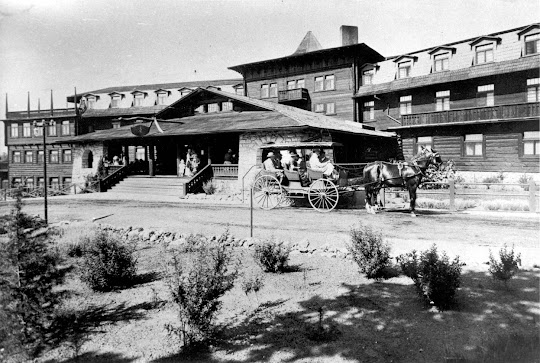
As always, I love how historical fiction introduces us to fascinating chapters of real life history. In the 1800's, Fred Harvey built a chain of hotels, restaurants, and other hospitality businesses beside railroads across America. He essentially invented the American chain restaurant and helped develop tourism in the "wild" west. In a century where women's roles were limited, the Harvey House hotels and restaurants offered respectable and well-paying work to single women. The "Harvey Girls" were highly trained, with a reputation for impeccable hospitality. They even inspired a Judy Garland musical! Emma Grace finds work and independence as a Harvey Girl at the very real, and still operating, El Tovar hotel. 


I really loved this whole story! The setting - both in time and location - were beautiful and fascinating. The history made me dig deeper into the real-life people and places. I loved the characters and was truly rooting for all them. Most of all, the plot kept me guessing, and ended in a very satisfying conclusion. 

What else could you want from a novel?


Kimberley Duffy is incredibly prolific, with books, blogs, and special offers for book clubs.
You can find out more at:

www.KimberleyWoodhouse.com


El Tovar Hotel, in the early 1900's (source: Wikipedia


Book has been provided courtesy of Baker Publishing Group and Graf-Martin Communications, Inc.

Saturday, January 29, 2022

Book Review: After She Falls, by Carmen Schober


Okay, stay with me - this is going to be a different one:

Today, I'm reviewing After She Falls -
a mixed martial arts (MMA) romance by Carmen Schober.

You heard that right: an MMA Christian Romance!

Let's start by going back a bit:

When Gerald and I were first married, we decided we would each subject invite the other to watch one of our favourite TV shows, in the interest of sharing our hobbies and interests. 

I chose American Idol - a fairly safe bet given our love of singing. Gerald chose The Ultimate Fighter - an MMA reality show about fighters trying to make it in the big leagues.

At first, I was horrified! I'm not a fighter, and I hated watching these young men (and eventually, women!) smash each other's faces into the canvas. But my new husband had a 2nd Dan Black Belt in Ishinryu Karate, and an extensive history in martial arts. Where I saw only violence, he saw skill and technique. Over time, I came to appreciate the true sport in the fights, and the incredible spirit of these talented athletes. 

So, when I saw that a new author had written an MMA Christian fiction romance,
I knew I had to review it!

Our heroine -  Adri Rivera - was raised in an MMA family. Her talent and passion had her on the fast track to success, until an abusive husband and unplanned pregnancy set her on a very different path. As our story opens, Adri has returned home to find a new life for herself and her daughter. But you can't escape old dreams and old flames in a small town.

I read After She Falls really quickly. The plot has a great pace, the characters are really clear, and the story comes to a very satisfying conclusion. 

But full disclosure with no spoilers - this book isn't going to be for everyone. 

There are detailed descriptions of MMA fights. They're really well done, but I did read some reviews where readers struggled with the violence. There are also descriptions of domestic abuse. These scenes are never gratuitous, and are completely necessary to the plot, but they're definitely difficult to read.

I'm not sharing this to be negative, but I know that scenes like this aren't typical for Christian fiction. I just think it's fair to warn you, just in case you're sensitive to such things.

Ultimately, After She Falls is a story of redemption, rebuilding, and returning to your dreams, 
and we all need more stories like that! 


Carmen regularly blogs about faith, writing, and fighting at:

www.CarmenSchober.com 


Book has been provided courtesy of Baker Publishing Group and Graf-Martin Communications, Inc.

Friday, January 28, 2022

Goal Setting Fridays - What Exactly Is a “Single Moment Goal”?


Welcome to Goal Setting Fridays!

Why Fridays?
So you can ruminate over the weekend & get a fresh start on Monday!

Please subscribe to receive all new posts!


Last week, we talked about how to
Sort Your Goals for Goal Setting Success


Sorting our goals involves organizing our dreams and aspirations into one of three categories:

  • Single Moment Goals
  • Habit Goals 
  • Longterm Goals


Today, I want to take a moment and talk about Single Moment Goals.

Many of us are familiar with Habit Goals and Longterm Goals,
but what exactly are Single Moment Goals, and why do they matter at all?


A Single Moment Goal has a few qualifications that make it unique:

  • It can be defined in just a few words.
  • It can be achieved with a few simple actions.
  • It generally has one singular result.
  • It can be achieved in a short period of time, generally under a day.


“Wait a second,” I hear you asking, “Is something that small really worthy of the word 'Goal'? Isn’t it just a To Do List item?”

Good question!

Your To Do List is probably like mine: full of simple, action-based tasks. Crossing items off your To Do List feels fantastic, but let’s be honest. At the end of the day, do you ever cheer, “Yay, another goal completed!” No, you don’t. You’re just happy to get stuff done.

A Single Moment Goal may be brief, but it's still a proper goal - something worth reaching for, something that takes effort beyond the every day. Any goal - big or small - should require us to reach outside our comfort zone, even just a little. 


How do you tell the difference between a To Do Item and a Single Moment Goal?

Goals always involve some degree of risk.


Signing up to receive a newsletter? No risk. Not a goal.
Signing up to audition for a play? Risk! Definitely a goal.

Buying a head of lettuce? No risk. Not a goal.
Starting your first day as a vegan? Risk! Absolutely a goal.

Ordering a book? No risk. Not a goal.
Emailing a publisher? Risk! Total goal!!


Notice that all these actions are small - signing up for something, shopping, sending an email. Each can be completed with a reasonably small investment of time and effort. But once you recognize that element of risk, you can feel the transition from a To Do Item to a Goal!


When trying to decide if an action should go on the To Do List or the Goal List, simply ask:

Is there any risk in doing this?
Do I get butterflies in my tummy when I think of completing this action?
Will this stretch me beyond my comfort zone?


If you can see the risk, fantastic! Name it and acknowledge the emotions spurred by that risk. Take a moment and imagine what it’ll feel like to complete that action. Finally, put it on your list of Single Moment Goals.

If there’s no risk, simply move the item over to your To Do List. Make sure it gets done quickly so you can spend your energy focusing on your actual goals.


Next week, we’ll talk about the "secret message" in those pesky items
that stay on your To Do List for weeks, months or even years!


What are some of your Single Moment Goals for 2022?


Thursday, January 27, 2022

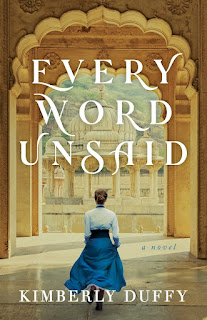
Book Review: Every Word Unsaid, by Kimberly Duffy


Welcome to my first book review of 2022!

Last year, I read a whopping 55 books! Definitely a record for me. 

If you're new to my blog, I regularly review books for Graf-Martin Communications' Nuts About Books review program. I had three books to read over the holidays, so hold on to your seatbelts - we've got three reviews coming in over the next few days!


Last year, I read and reviewed Kimberly Duffy's A Tapestry of Light. 
(True confession - I was about to write that I read this book in 2020! Pandemic time warp is a real thing!!!)

I loved Kimberly's detailed and engaging approach to historical fiction, so I jumped at the chance to review her latest offering.

Every Word Unsaid opens in Deadwood, 1897. If you've ever studied anything about the Wild West (or watched HBO's Deadwood series), you'll know this is a dramatic spot for an opening chapter.

Here we meet Augusta (Gussie) Constance Travers - a New York socialite with a taste for adventure. Her magazine readers know her as Miss Adventuress - a fearless, modern traveler. Her writing and photographs bring tales of exotic lands to housebound American housewives. But not everyone values her work, and when scandal threatens her family, she embarks on a journey overseas. A trip to India and a visit with friends drops her in the midst of a pandemic, a love story, and her greatest adventure yet.

First, can I say how bizarre it is to read a story set in a historical pandemic? Some of our characters are in the medical field, and it's painful watching them struggle with illness and death, knowing the limits of their own scientific knowledge.

Second, I loved these characters! Actually, I pretty much loved everything about this book. It was emotional, fun, heartbreaking, and beautifully descriptive. Gussie's relationship with her uncle might have been my favourite in the whole book.


As always, I loved googling the different locals and historical figures referenced in the story. One of my favourites was the Kodak Girl. As Kodak started to develop portable cameras, they created a savvy marketing campaign targeted at the new, modern woman. The Kodak Girl was a fresh incarnation of the classic Gibson Girl, with smart clothes and an independent spirit. Gussie aspires to be just such a modern woman and references the iconic character several times. 
(Ryerson University in Toronto has a really interesting article about the Kodak Girl HERE.)


What's Left Unsaid
is an engaging, dramatic, beautifully written piece of historical fiction. I turned down many page corners and circled many wonderful passages of writing. 

I can't wait to see what Kimberly writes next! 


Kimberly Duffy's site offers a free short story, as well as a special invitation for all Book Clubs!
You can find out more at:

www.KimberlyDuffy.com 


Book has been provided courtesy of Baker Publishing Group and Graf-Martin Communications, Inc.

Friday, January 21, 2022

Goal Setting Fridays - Sort Your Goals for Goal Setting Success

Welcome to Goal Setting Fridays!

Why Fridays?
So you can ruminate over the weekend & get a fresh start on Monday!

Please subscribe to receive all new posts!


Last week, we talked about
If Resolutions Aren’t Goals, What Good Are They?


In our last post, I encouraged you to start writing down your dreams and aspirations for all the different areas of your life.

By now, you should have a wonderful pile of aspirations for your Relationships, your Profession, your Creativity, your Spirituality …  So many wonderful dreams for the year!


But now that we have this awesome pile of ambitions, what do we do with them?


The next step is pretty easy, but also really critical. If you’re like me and you love organizing things, this next step is for you!

(And if you don’t like organizing, no worries. It’s a pretty simple step!)


It’s time to sort your goals!


“Oh,” I hear you saying, “They’re all so important. How can I possibly sort them?”


Different dreams have different needs, and that’s what we’re going to figure out next.
Some need lots of time, some need an ongoing commitment, and some just need a spark of energy. 

By figuring out which goal has which needs, we give that goal a better chance of success!


We’re going to sort all the aspirations on our page into one of three categories:

  • Single Moment Goals
  • Habit Goals
  • Longterm Goals


SINGLE MOMENT GOALS

These are small items that can most likely be achieved with a single effort. They might, in the end, become part of a larger project, but for now, let’s just put them in this category. Since Single Moment Goals can be achieved fairly quickly, they give us a swift sense of accomplishment and a strong jolt of motivation to tackle larger projects! 


HABIT GOALS

Habit Goals don’t have end date. Instead, these aspirations are going to become part of your daily, weekly, or monthly routine. For example: "Read 50 books this year” is a Longterm Goal that will take you a year to achieve. While “Read 30 minutes a day” is a Habit Goal, requiring a regular commitment. Success with a Habit Goal comes by living into that commitment. Eventually, succeeding in this Habit Goal will help you achieve your Longterm Goal, but it’s important to differentiate between the two. We’ll discuss this important distinction in more detail in a future post.


LONGTERM GOALS

This are the big projects that need concerted effort over a significant period of time. As I’ve already mentioned, both Single Moment Goals and Habit Goals can help contribute to achieving your Longterm Goals. For us creative types, a Longterm Goal could be write a book, record a CD, or perform a national concert tour. Other examples could be launch a new business, rebuild a broken relationship, or find and become a regular member of a local church.


To start this sorting process, let’s first choose one life area from last week’s brainstorming session. Since I talked about my walking habit in my first post, let’s look at the area of Health.

Look at all the aspirations you listed under Health.
Now, let's designate each item on your list as a 
Single Moment Goal, a Habit Goal, or a Longterm Goal.


Which items on your list are achievable in a Single Moment? Which will simply take a phone call, a few hours of research, or an afternoon of creativity to achieve? For example, one of your Health aspirations might be to catch up on overdue medical appointments. In that case, items such as “book my annual bloodwork” or “google local dentists” can go in the Single Moment category.

Next, which items from your list of aspirations can become part of your routine? Habit Goals are the things that will fall easily into a some kind of regular or semi-regular schedule. For example, my initial walking goal was a 20-minute walk, 5 times a week. It was something I could regularly mark on my calendar, and check off for each day I actually made it out the door.

And finally, of all your dreams, which are going to take a long time to achieve? Now’s the time to name those Longterm Goals! For many people, their longterm Health goals might look "like lose 40 pounds", "reduce my cholesterol", or "run a marathon". These are goals that will encompass many dedicated steps over a significant period of time. But once accomplished, they can literally become a "dream come true!" Ideally, we should have a least one Longterm Goal for every area of our lives. These are the major aspirations we have for our Spirituality, our Profession, our Family - everything! Do you want to travel to another country? Restore a French chateau? Launch your child into adulthood? Start your own publishing company? This should be an exciting list filled with inspiring dreams for your life.


Don’t just mentally sort all these aspirations - actually write them down. Maybe you can take your initial brainstorming list, and simply write SMG, HG, or LTG next to each aspiration. Or start a whole new list and colour-code everything. Either way, write it down and let it imprint on your brain.


And once that’s done, take a break. Have a snack. Let things percolate.
Goal setting can be overwhelming.
Allow yourself time to breathe and reflect.


What are some of your Single Moment, Habit and Longterm Goals for 2022?